Jeno Weissbluth (Jacob ben Yehiel), born on September 24, 1899 in Mezonyek, Hungary, into a very religious family. He was the son of Josef Narcisenfeld (Israel Narcisenfeld) (Yechiel ben Simon) (born in 1874 in Homona, Hungary) and Gizella (Golda bas Avrohom) (born in 1870 in Munkacs, Hungary). Gizella’s maiden name was Klen. Josef and Golda had a set of twins that died at birth and then their oldest child, Lajos (Louis) Kiss followed by Jeno. Josef was the Rabbi as well as the “schochet” or the person who performed the ritual slaughter of animals, among other jobs. The community had a large temple that was oversized for the size of the community and Josef performed several functions in the Jewish community.
Jeno was the first in his family lineage to receive a secular education. Some time in the 1920’s, Eugene or “Jeno”, was the principal and a teacher at the Jewish elementary/middle school in (initially was six years and later a combined duration of eight years) in Mezocsat. He was a pioneer in special education. As a result of his family background and an in depth Jewish education, he was a very devoted son, husband and father. In addition to his meeting his primary responsibilities to his family, he devoted his life to doing good deeds (mitzvos) for his fellow men. He was a man and a Jew who led an exemplary life.
Prior to getting married on December 29, 1930 to Rozsi Rosenblum , daughter of a prominent Jewish family (she was murdered on July 12, 1944 in Auschwitz) and for a short period of time thereafter, he rented an apartment on the Main Street in Mr. Barany’s house. Subsequently, with the his wife’s dowery, they purchased and extensively remodeled and expanded a farmer’s house at 22 Gyoni Geza Utca. The family lived at this address until they were deported in 1944. There was also a middle school generically called “polgary” in Mezocsat. Jeno also taught German to private students and part of the year, taught in the agricultural school. He was always deeply involved in helping individuals with problems in the Jewish community (“klal-tuer” in Yiddish) and frequently represented parties in front of the Rabbi’s Court (the “bet din”). On a number of occasions he served as a “second” for this dueling Christian friends. He always regretted that he could not become an attorney, because he loved both mental and verbal challenges. Eugene and Rozsi had four children and Rozsi was pregnant with another at the time of her death. The children were as follows:
Weiszbluth Gyozo Tamas (Avrohom), born October 2, 1931
Gyorgy Tivadar (Nickname Guyri and Hewbrew Name of Menachem Mendel), born May 24, 1933 and murdered in July (7.12.1944?) of 1944 in Auschwitz
Oscar Ivan (Nickname “Oszi” and Hebrew Name of Arye Leib), born April 23, 1935 and murdered in July of 1944 (7.12.1944?) in Auschwitz
Alfred Denes (Nickname “Fredi” and Hewbrew name of Eliezer Zvi), born May 2, 1937 and murdered in July of 1944 (7.12.1944?) in Auschwitz
Juditka (Nickname “Mucus” and Hebrew Name of Kaila), born May 25, 1940 and murdered in July of 1944 (7.12.1944?) in Auschwitz
Prior to the Jews being deported en mass from Hungary, starting May 15, 1944, the Hungarian government was deporting Jewish people whose names indicated that they might not be of Hungarian ancestry. Jeno’s father, Josef, was born in Munkacs, which is now in Romania. Those persons who were deported were immediately murdered. Unbeknownst to his wife, in 1941, Jeno borrowed money to bribe a government official to provided paperwork to Israel and his wife with the names that would not result in them being deported, thus saving their lives, until 1944 when they were deported to Auschwitz. This debt came to light when Jeno was away serving in the Hungarian labor battalions and he temporarily stopped making payments on the obligation. Jeno’s parents changed their last names to “Narcisenfeld” which is believed to have been Golda’s maiden name.
Later in life, Jeno wrote an autobiography in Hungarian which thanks to the efforts of Alex Reed, have been translated and appear in the Appendix.
Per the Enclyopedia of Camps and Ghettos:
“The internment camp system was expanded after Hungary entered the war against the Soviet Union on June 27, 1941. This expansion was coupled with the drive against so-called alien Jews. During the summer of 1941, the Hungarian authorities rounded up approximately 18,000 Jews, among them many native born, who could not instantly prove their Hungarian citizenship. Together with an additional 5,000 Jews, they were deported to German-occupied Ukraine in the vicinity of Kamenets-Podolsk, where almost all of them were murdered in late August. Before being deported, many of these Jews were first concentrated in Hungary’s major internment camps, including Kistarcsa, Topolya, and Sárvár.”
Miskolc and Surrounding Towns Residents,as Reported by Survivors After the Holocaust
Introduction by John J. Kovacs (A Miskolc Survivor)
Background
This database contains information about 10,831 Holocaust victims from Miskolc, Hungary and surrounding towns.
The purpose of this project is to commemorate approximately ten thousand Jewish victims of the Holocaust of the city of Miskolc and of those who lived in 134 different towns in the county of Borsod. (For a complete listing of the surrounding towns and information available, please see the “Database” section below.
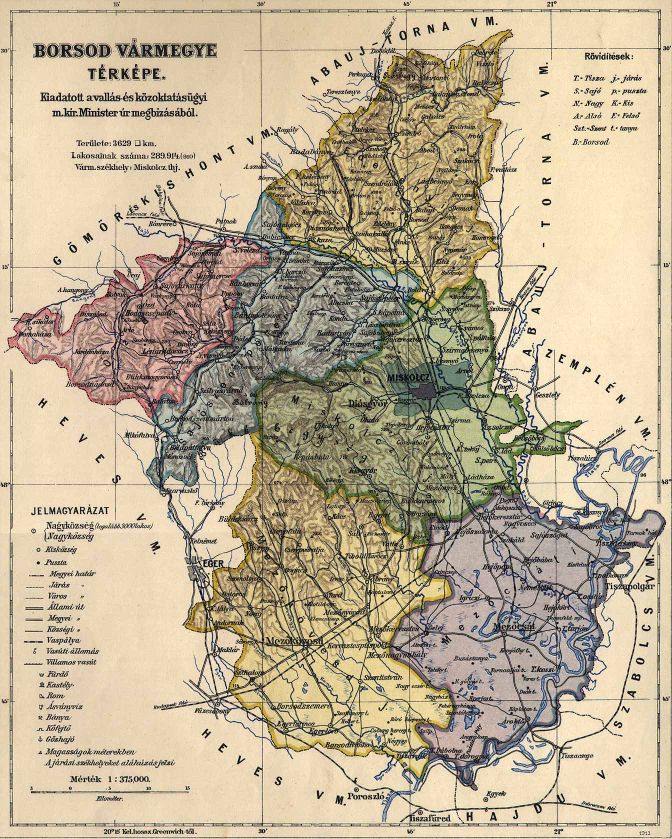
The city of Miskolc in the 1940s was reported to be the second largest city in Hungary, with a population of about 100,000, which included approximately 14,000 Jews. Miskolc was also the seat of the county of Borsod. Besides Miskolc, Jews lived in some very large and some small towns in Borsod county that we call “the surroundings.” (See the below map of the County of Borsod.)
From the early 1940s, many Jewish Hungarian men of military age, who were able to perform physical labor, were inducted into labor service units as part of the Hungarian military since Jews were not allowed to carry arms or wear uniforms with military insignia. From about 1942 they could only wear civilian clothes, an armband, and a military cap without insignia. By 1944 most of the able bodied men were in labor service units.
The rest of the Jewish population remained in their homes until the German occupation of Hungary in March 1944. Thereafter, Jewish men, women, children and the elderly outside of Budapest were progressively put into ghettoes and later deported to concentration camps. Jews of Miskolc and surroundings were deported in jam packed freight cars to Auschwitz in June 1944. The trains left the Miskolc area on June 11, 12, 13 and 14 and arrived in Auschwitz on June 13, 14, 15 and 16. Later on, members of some labor service units were also deported to German concentration camps and they also died in labor service, especially on the Ukrainian front.
The Miskolc martyrs list was compiled by members of the Jewish Community who survived the Shoah and returned to Miskolc and surrounding towns from concentration camps or labor service after WWII. A copy of this list was located at the Kazinczy Street Synagogue of Miskolc in 2007 and was used for this project. This original community list at the synagogue consists of approximately 406 manually typed pages, some already faded. Thus, our list of martyrs for the city of Miskolc contains 6,588 names with a person’s occupations and street address as available from the community list. In comparison, the Miskolc Yizkor Book, entitled “Miskolc és Környéke Mártirkönyve” (The Book of Martyrs of Miskolc) by Rav Slomo Paszternak, 1970, contains an estimated 300 or more names, but it does not include a list of occupations and addresses. The two Miskolc lists vary however, as some names are spelled differently and some may be available in one and not in the other list. Thus the advantage of our and the original community list used in this project is that besides the name and year of birth of the martyr it also contains the occupation and former resident street address for the city of Miskolc. This additional information can be important to the genealogical researcher as many of the names are similar. For the list of martyrs in the other towns of Borsod county, our list contains 4,243 names in 134 towns whereas Paszternak has a pproximately 66 additional towns and an estimated 3,400 more names. For the other towns we do not have street addresses.
The Jews of Hungary by Raphael Patai. On the eve of the German occupation of Hungary on March 19, 1944, there were about 775,000 Jews in Hungary of which 175,000 lived in Budapest and 600,000, like our family, lived in country towns. The number of Jewish communities outside Budapest numbered about 360. One very important question was how the Hungarian Jews reacted to the cries of laws that successively deprived them of their long held rights. There seems to have been 3 distinct reactions-the first being that of the official Jewish leadership position which was that “this, too, shall pass.” Leading rabbis and community leaders were unanimous on counseling patience, endurance and biding one’s time. They simultaneously tried to influence government by reiterating their patriotism and by arguing that excluding Jews from economic and professional activities could only harm the national economy and harm national interests. the second was that of the simple members of the Jewish community, which was the opposite of the official Jewish establishment. It consisted of haphazard and unorganized individual attempts to escape from the rapidly closing trap that Hungary had become for Jews. However, in the absence of an official directive, the realization that the only hopeful survival was immigration came too late for the vast majority. It was only after the German occupation that some Orthodox Jews voiced this conclusion when some advocated readiness for emigration and even reproached Orthodox leadership for having been tardy in recognizing this necessity. The lack of preparation combined with the increasing impediments imposed on Jews inside Hungary meant the only 6,000 Jews managed to escape Hungary and migrate to Palestine between 1939 and 1944. The third reaction was from those Jews that tried to be informed of the progress of the war. As Germany struggled, the hope was that the Allies would soon be defeated. They had heard terrible things from the Polish and Slovakian Jews that fled to Hungary as refugees but still too many Hungarian Jews believed that “it could not happen here” because Horthy would not tolerate it.
In reality, when Germany introduced anti-Jewish laws, the long endemic anti-Semitism evinced an upsurge in Germany as well. As the Nazis tightened their grip on Germany, the Arrow Cross party gained in strength in Hungary. When Germany started the systematic extermination of Jews, the same policy received increased support in Hungary as well Even after the implementation of a series of anti-Jewish laws in Hungary, the Nazi “invasion” of Hungary resulted in even harsher laws. Jews were ordered to register and then surrender their telephones, wear the yellow star (even if they were converts to Christianity), were forbidden to hire non-Jewish household help, register any cars in their possession, were summarily dismissed from state and public offices and were excluded from practicing law, prep, motion picture and theatre chambers. They were not allowed to use cars, motorcycles, taxis, trains, buses and ships-all forms of transportation except street. cards. All radios had to be turned in and Jews were not allowed to work in any intellectual capacity and Jewish writers were not allowed to publish their works. Jews had to register all of their assets, their bank accounts were closed and the contents of their safe deposit boxes registered and frozen. Jews were allowed to withdraw only 1,000 pengos and could not have in their possession more than 3,000 pengos. All Jewish businesses were closed, including more than 18,000 Jewish stores in Budapest alone,
A highly confidential order was issued to all prefects, mayors, gendarmerie commanders and other officials informing them that the government had decided to clear the country of Jews”within a short period of time.” Jews were to be rounded up regardless of sex or age and would be allowed to take along only a minimum of supplies, such as the clothing they wore, 2 sets of underwear and shirts, food for 14 days and other baggage not to exceed 50 kilograms. They were not permitted to take any money, jewelry, gold or other valuables. SINCE THE GERMAN OCCUPATION FORCES WERE LIMITED IN NUMBER, THE EXECUTION OF THE PLAN WAS TO BE CARRIED OUT BY THE LOCAL POLICE AND THE HUNGARIAN GENDARMERIE, WHICH WOULD BE SUPPORTED BY EICHMANN’S SONDERKOMMMANDO IN A SUPERVISORY AND ADVISORY CAPACITY.
In order to avoid any overt resistance by the Jewish communities in the countryside, the Germans worked out a master plan of deception. Using this plan, they were able not only to mislead the Jews but also to reassure those Hungarian authorities who would not have been willing to go along with the German plans for mass murder. The Nazis along with their Hungarian henchmen inspected the Jewish ghettos and reported back to the Hungarian government that “the provincial ghettos have the character of sanitariums. At last the Jews have taken up open-air life and exchanged their former mode of living for a healthier one.” The deportation of Jews was effected under the pretense that it was at the request of the local authorities “because of health and feeding difficulties prevailing in the ghettos. On May 15, 1944, Eichmann began to organize and carry out the actual deportations. Within 8 weeks, first 320,000 Jews were deported from northeastern Hungary, then 42,000 from northern Hungary, then 56,000 from southern Hungary and finally 40,000 from western Hungary. Within 8 weeks, some 458,000 Jews were sent their deaths. The day before the deportations, hospital patients, newborn babies, the blind, deaf, mentally disturbed and prison inmates of Jewish origin were added to the population of the local Jewish ghettos. From there, they, along with the rest of the ghetto population were driven or marched to the railway station where they were loaded into freight cards. About 80-100 people were crammed into each car, which was supplied with 1 bucket of water and 1 waste bucket. The doors were padlocked and windows and other means of ventilation boarded up. Many died along the way as the deportations generally took place during the height of the summer. In the case of our family, they were initially taken to a brickyard at Dios____, Hungary, not far from Miskolc. It was one of 5 ghettos or concentration centers in the Miskolc area. The dates of ghettoization or concentration were June 5-10 and the dates of deportation were June 11-16 with approximately 50,000 people deported. Diog ___ was a regional gathering place for Jews from that part of the country and they stayed there for weeks. Our family met up there with Jeno’s parents. I am not sure if Jeno’s nephew, Dezsi, was there. From there, everyone was once again forced onto freight cars and deported to Auschwitz. Upon arrival, the already weakened Jews were “processed” in accordance with the following pre-established rules: Children up to the age of 12 or 14, older people above 50 years of age, the sick and people with criminal records were taken immediately to the gas chambers, The others passed before an SS doctor who on sight, indicated who was fit for work. Those unfit were sent to the gas chambers and the others were sent to 386 different camps.
Jeno witnessed his parents, pregnant wife and youngest 3 sons and daughter all go in a different direction than the younger healthier adult although at the time he did not comprehend the dire significance He did observe enough of the proceedings in the selection line that he told his oldest child, Tommy, to lie about his age, saying he was older than he really was and thus savings his life, at least temporarily. Some highlights of Eugene’s life included the following:
-After he was drafted into the Hungarian Army to serve in the labor companies with his fellow Jews in 1941, he ended up in Russia. His labor company’s commanding officer was a fellow (Christian) teacher with alcohol problems. Through this individual he managed to run the company and greatly lightened his fellow Jews’ burdens. While in the Ukraine, the police caught two Jewish woman who pretended to be Christians. The Ukrainians were going to kill them, but he managed through a German officer (who got paid off in watches collected) to save their lives. Their “Christianity” got further documented and sent to a different region of Russia. Upon being discharged, his fellow Jews gave him a specially designed plaque with everyones signature on it, as an expression of their appreciation.
In the winter of 1943-43, of the nearly 50,000 Jews in labor service on the eastern front, some 43,000-44,000 died and only 6-7,000 Jews returned to Hungary, including Eugene/Jeno.
-In 1944, when the family was about to be deported from Hungary, Eugene was given a chance to escape deportation by enlisting in the Army. Unlike many others, he was firm in sharing the fate of his family. On that fateful night when the family arrived at Auschwitz, and dismounted from the box cars, the flames of what we later learned were the crematoriums were shooting out of tall chimneys, my Grandfather, Rabbi Yechiel ben Simon otherwise known as Josef Narcisenfeld, asked my father, Eugene, to stand aside and bow his head. As my father obeyed, my grandfather placed his hands on my father’s head and with the crematoriums in the background and our people about to die, Josef Narcisenfeld, my grandfather, gave my father his last Rabbinical and fatherly blessing. In this blessing my grandfather departed from the traditional text in that he also prayed to God (a) that he give my father a long life and the strength to _____ the difficult challenges, (b) that he have many _________________ descendants and (c) he invoked the names of his ancestors in giving the blessing. Shortly after this unforgettable event, Rabbi Yechiel ben Simon along with all of our family, died.
-In the death camps, my father saved my life. I as a 12 year old pretended to be 18, telling me to lie about my age in order to be saved. He served as an unwavering tower of strength and hope. He managed to work in the office for awhile and rewrote list after list of inmates who were to sent back to Auschwitz because they were judged not to be fit to stay in the work camp, thus saving many Jewish lives.
-After the war my father again became active in Jewish affairs. He founded the Jewish Orphanage in a major displaced persons camp. He also founded the Hungarian Jewish Federation and became the organizer, President, Publisher and Chef Editor of its newspaper.
-After emigrating to the United States, he helped me financially start college (by selling his stamp collection, borrowing money and working) and attend same until I was drafted in 1953.
He was the President of two different synagogues and Vice President of the Warrensville Center Synagogue until his death on February 5, 1989. He was a strong supporter of Israel and a special Israel Bonds dinner was given in the honor of he and his second wife, Gertrude.
Jeno married Rozsa Rosenblum, daughter of Armin Rosenblum and Tini Treuhaft. Armin was a successful entrepreneur in Sarospotok. He ran a business called Rosenblum and Son, which included a small gauge railroad the they would build and remove from forests that they would harvest. He also was a farmer and he gave land to in son in laws as part of their dowery. Jeno was a teacher so he appears to have received money as the dowery when he married. Jeno and his wife used their dowery to purchase a home, fine furnishings and a library. Together they built a life in Mezocsat where they enjoyed a normal life for some time.
Jews were not allowed to serve in the Hungarian military in the 1940’s although many served their country through military service prior to that date. In lieu of military service, Jews were forced to serve in labor battalions which performed all kinds of work on behalf of the Hungarian military. Despite an exemption, Jeno was required serve in the labor battalions, where he was looked upon as a leader by his fellow laborers. He wrote the families of his fellow Jews on behalf of the illiterate members of his two labor companies and smuggled letters to their families through returning soldiers. Their gratitude was such that they created a large a large colored drawing for him with their signatures on it upon their return to Hungary. In 1943, while serving in the forced labor battalions, he was also instrumental in securing the freedom of three female Jews from the Ukrainian police. Upon learning of their capture, he was able to convince two members of his labor battalion to give up their gold watches which he used as bribes to obtain the womens’ freedom, pretending that the women were Christians.
When the family was about be deported, Jeno was given the option of leaving his family and volunteering to serve again in the Jewish labor units of the Hungarian Army. Quite a few men chose to leave their families and serve in the Army, but Jeno opted to stay with his family and did everything he could to make the situation better for them. His loyalty was evident throughout his life. Later, when given the choice to escape or to leave his son Tomi after he was shot by a guard, Jeno chose to stay with his son. They both managed to survive and the story of this Hobson’s choice will be told in another part of this site.
Eugene and his family were forced to move into a newly created ghetto in their town of Mezocsat for several weeks. The ghetto was a part of Mezocsat that happened to have the most Jewish owned homes. Eugene and his family were forced to turn over much of their valuables to those that imprisoned him. They also gave Rosza’s wedding ring and a few other valuables to a good friend to hold for them. They carried as much food with them as possible after sealing up their home. The family had one small room in Mr. Frencz’s home. Mr. Ferencz had sold and repaired large clocks prior to deportation. After several weeks, on May 14, 1944, the imprisoned Jews of Mezocsat were then marched through town in front of their neighbors and other villagers before being placed in cattle cars where they were transported to a brickyard in Diosygor, outside of Miskolc. As a gathering point for the Jews who had lived in the region, it was not long before the Weissbluth family was joined by Eugene’s parents, Joseph and Giselle. The brickyard had several covered sheds under which people tried to live during their imprisonment. There were separate bathrooms for men and women but they were both open and exposed, so that the women especially, were denigrated. The Jews were forced to live there, more or less like animals, for several weeks before once again being forced into cattle cars and being transported to Auschwitz. Upon arrival in Auschwitz where the guards, with snarling dogs, yelled at the Jews and rushed them out of the train cars. Eugene’s father took Eugene and his grandson, Tom, between two cattle cars, told Eugene he had been a good son, gave him the priestly benediction and wished him and his descendants a long life before they went through the selection process.
The Priestly Benediction-The Lord bless you and keep you“
The Lord said to Moses, “Tell Aaron and his sons,
‘This is how you are to bless the Israelites. Say to them:
‘The Lord bless you
and keep you;
the Lord make his face shine on you
and be gracious to you;
the Lord turn his face toward you
and give you peace.’
‘So they will put my name on the Israelites, and I will bless them.’”
Numbers 6:22-27
Once blessed, the family was rushed through the line, with children, old and sick people being shunted one way while healthy people of the correct age were sent to the other. Eugene and Tom survived the initial selection, with Tom surviving selection by lying and saying he was 17 years old despite only being 12. Tom was big for his age, had blond hair and blue eyes. One of the people from his village yelled to the person making the selection that Tom was not really 17. Despite the interruption, Tom was sent on his way along with his father. Tragically, Eugene’s wife, sons, daughter, parents and in-laws all were immediately murdered upon entry. Eugene did not believe that his family had been murdered, thinking that the Germans were too civilized to have done something like that but he did eventually and reluctantly come to the realization that they were gone. Those surviving the initial selection were stripped of their clothing, allowed to keep only their shoes, showered (which after weeks and weeks of deprivation, felt wonderful) and had all the hair removed from their bodies by men wielding razors and provided with a pair of pants and a shirt (but no underwear or socks) before being crowded into a stable in Birkenau, otherwise known as Auschwitz II. The stable was so overcrowded that everyone had to sleep on their sides and if you got up for any reason, such as to go to the bathroom, there was no room for you when you returned. The next few weeks dragged on as the inmates just sat around. Finally, after several weeks of sitting around, Eugene and Tom were transported to Dachau by train, arriving on July 11, 1944. From Dachau they were transported to one of the many Dachau sub camps, initially the Allach concentration camp. Allach was the first of seven sub-camps to supply the BMW armament factory with slave laborers, where airplane engines were produced and repaired. Eugene was also sent to Muhldorf, another sub camp of Dachau and he was assigned Prisoner No. 79 767. The records at Dachau record his year of birth as 1897 rather than 1899.
Eugene’s strong spirit, his sense right and wrong and his ingenuity made him much admired by his fellow prisoners. He was a comfort to his fellow prisoners and saved many of their lives. Because he spoke German and had neat handwriting, Eugene was made a clerk in ____________. The camp commander was a mean son of a bitch-he conducted lengthy apfels or “roll calls” daily, beating and killing prisoners daily. Eugene learned that the camp commander had throat cancer and unable to find treatment. Eugene learned that he had even sought treatment from a Jewish doctor imprisoned in the camp and was again told that there was nothing that could be done for him. Despite that, Eugene told the commander that he had studied medicine in Vienna before the war and could help him. Eugene went to a pharmacist and convinced him to give him some medicines that would at least give him the illusion of successful treatment. Eugene also convinced the commander that it would be helpful for the commander to stay inside in the warmth of his quarters rather than standing outside in the cold with his prisoners. With the commander staying inside the prisoners were much safer from the vagaries of his tirades. Eugene was also able to remove the names of prisoners from the execution lists, again having peoples live, at least temporarily. Because of Eugene’s good relationship with the administration of the camp, he was also able to have his son Tom treated for typhus, caused by ingesting unpasteurized milk and to have Tom convalesce in the office. Tom was also assigned to work with the Jewish doctor, treating fellow prisoners. Many prisoners had terribly swollen legs that the Doctor had to drain, with assistance from Tom.
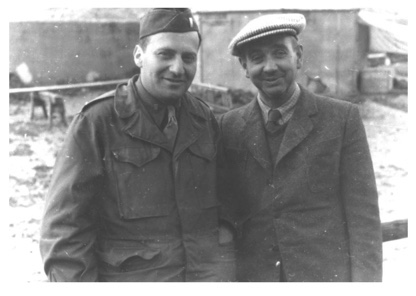
One of the SS guards, a man named Grif, recognized that the Germans were losing the war. As such, he and Eugene struck a deal to save each other. Grif would take Eugene and Tom away as his prisoners, using his rifle to guard them and Eugene and Tom would take Grif as their prisoner when they came upon American or Russian lines. The Germans planned on killing all of the prisoners. Initially the plan was to march them to the mountains were they would be killed. Many died along the way due to inhumane treatment-those who could not keep up were shot, stabbed or beaten to death. As this was not fast enough, the Germans started moving Jews by train. Eugene and Tom were entrained along with Grif and sent on their way to be murdered. The train stopped at Poing, Germany where there was a massacre following an announcement that the prisoners were free to leave, as the Americans were there. The announcement turned out not to be true and the Germans massacred as many as possible of those who left the train. Eugene and Tom remained in their rail car, along with a supply of bread, thus remaining safe, at least temporarily. Tom saw a guard eating bread and shooting Jews in between bites. Another guard that Tom knew from the camp approached them and wanted to shoot Tom in the head, claiming that he had tried to escape. After much harsh discussion during which Tom said his final prayers, Grif convinced the overeager guard that Tom had not tried to escape and so the guard shot another Jew sitting there instead. The train continued to Tutzing, Germany where the train was attacked by U.S. planes as a result the train having anti-aircraft guns attached to it. As the prisoners and guards ran from the train, Tom was shot in the upper leg by a guard. Tom fell and was unable to get back up. With help, he and Eugene and Grif returned to the train. Grif still wanted to escape, but knowing that Tom would not be able to participate since he could not walk. Eugene stated that if Tom was going to die, that he would die with him. That night Eugene and Tom went to sleep convinced that they would die the next day. Instead, when they woke in the morning, they heard loud noises-the noises turned out to be American tanks and troops. Eugene Tom and Grif all left the train, with Grif changing out of his uniform. Eugene and Tom kept their part of the bargain, not informing anyone of Grif’s true identity. Sometime the next night, Grif disappeared , leaving his wallet, his knife (which we still have) and two deaths head buttons which Tom kept. The Americans moved the train to the neighboring town of Feldafing where they took over the elite Hitler Youth school, moving the many Hungarian Jews in who had been on the train liberated at Tutzing. The Americans fed them and provided as much medical care as possible. Despite their best efforts, many were too far gone and died after liberation.

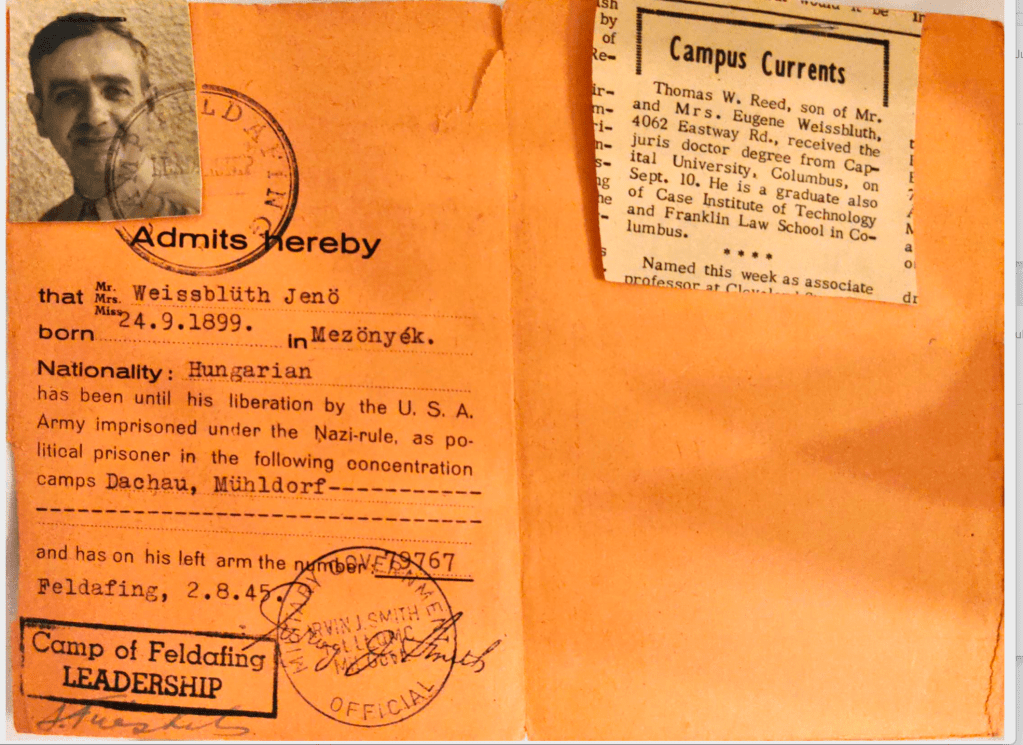
The facility was opened on May 1, 1945 and Eugene and Tom were admitted on May 2, 1945. Soon, the barracks in the camp and some local villas in Feldafing become home to them as well as many other survivors-some Hungarian, some Greek and some from other countries.

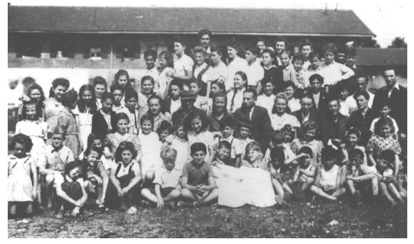
Eugene would become the founder and headmaster of the facility known as the Kindercasino, a residential school housing about 450 Hungarian children. Most of the children were repatriated to Hungary via American trucks after which the school became much less significant.
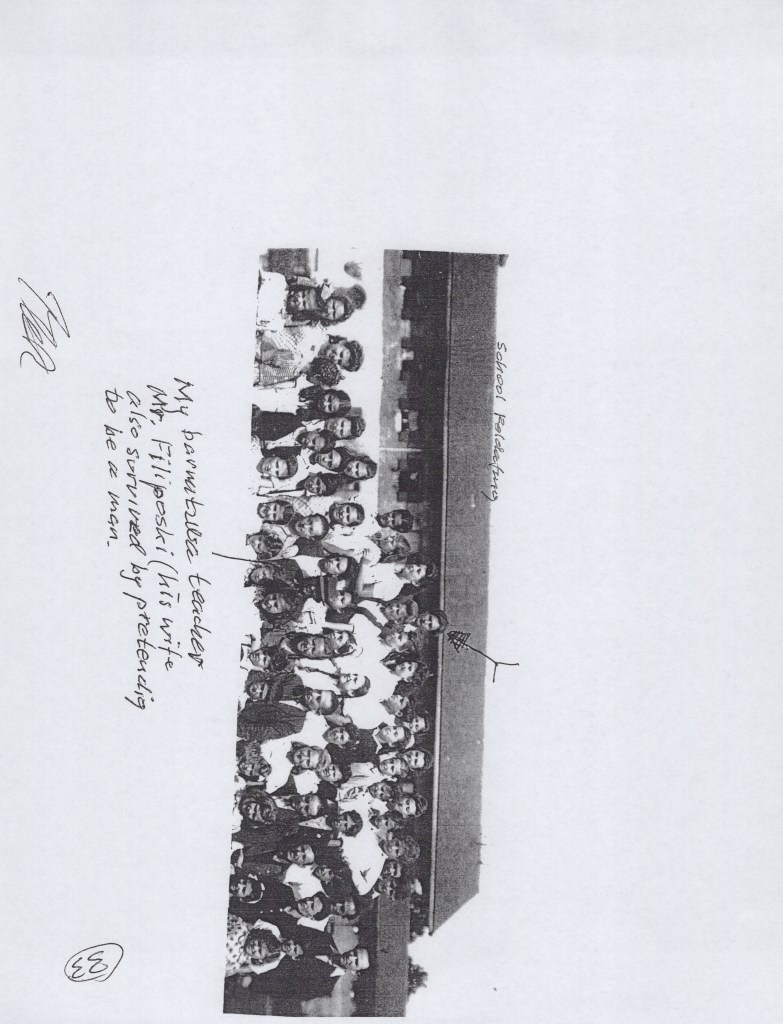
The camp had many important visitors-Mayor Laguardia from New York was a visitor and he even left his hat in Eugene’s office. General Patton visited as did General Eisenhower. He was also the founder of the Federation of Hungarian Jews in Germany. He became the Vice President of the Federation and editor of its newspaper. He then served as President of the Federation until he emigrated to the United States.
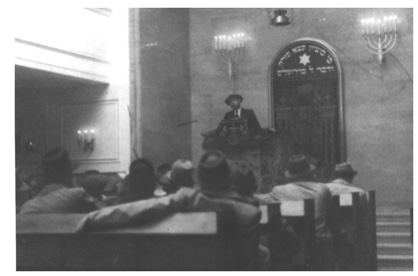
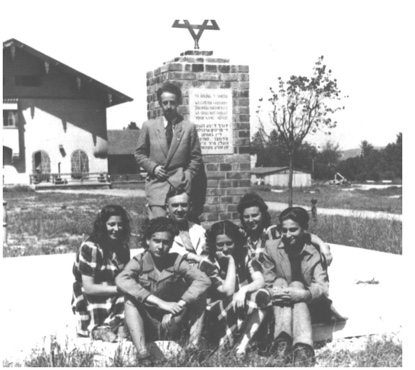

The names of his first wife and the children he lost as set forth on the Memorial Wall in Mezocsat, Germany, are set forth below.


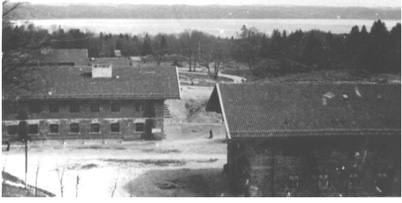
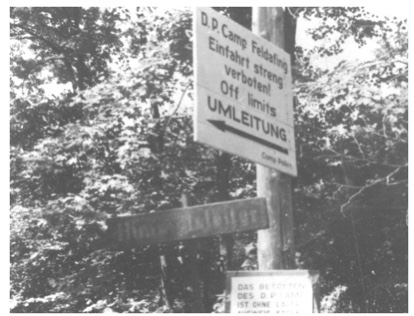
Immediately upon liberation, Jeno lived at Displaced Persons Camp Feldafing in the City or Village of Feldafing, located in Bavaria, German, about 30 minutes from Munich, in the American zone. The camp was opened on May 1, 1945 as an emergency measure to house the mostly Hungarian Jews (who were abandoned at railroad sidings near Tutzing after having been evacuated from the Muhldorf Concentration Camp on the way to be massacred in the Tyrolian mountains) who found themselves in the area when the Germans surrendered. Feldafing became the first Displaced Persons camp exclusively for Jewish refugees. The Feldafing DP camp was formed on the grounds of the Reichsschule Feldafing, an elite school for Hitlerjugend situated in a villa area on Hohenberg in Feldafing with a wonderful view the lake. The properties making up the camp were acquired by purchase, forcibly sold or confiscated from their Jewish owners. The camp consisted of wooden and stone barracks’s well as villas that had been part of the school.

Eugene and Tom must have lived for some period of time on the east side of Building 1A in order to have had this view.
Although originally the camp was intended to primarily house some 3,000 Hungarian Jews, the camp also housed many non-Jewish survivors until July 1945 at which time American Chaplin Abraham Klausner played a significant role in convincing the commandants of Dachau and Feldafing to empty Feldafing of its non-Jewish Polish and Hungarian DPs and to replace them with the remaining Jewish survivors from Dachau.
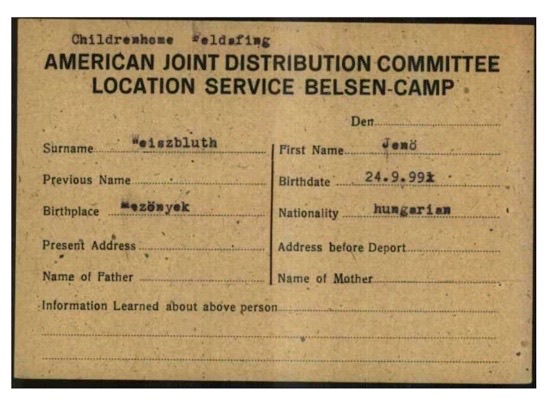
Jeno founded and was the first director of the “Kinder Kassino” which was a block of 450 children. Jeno and his son Tom arrived on May 2, 1945 and departed May 15, 1948 at which time they moved to Munich where they lived until departing for the United States. Based on the card shown below, it is believed that Jeno and Tom lived for some time in the barracks known as Kindergarten, the location of which is Building 44 on the map set forth below.

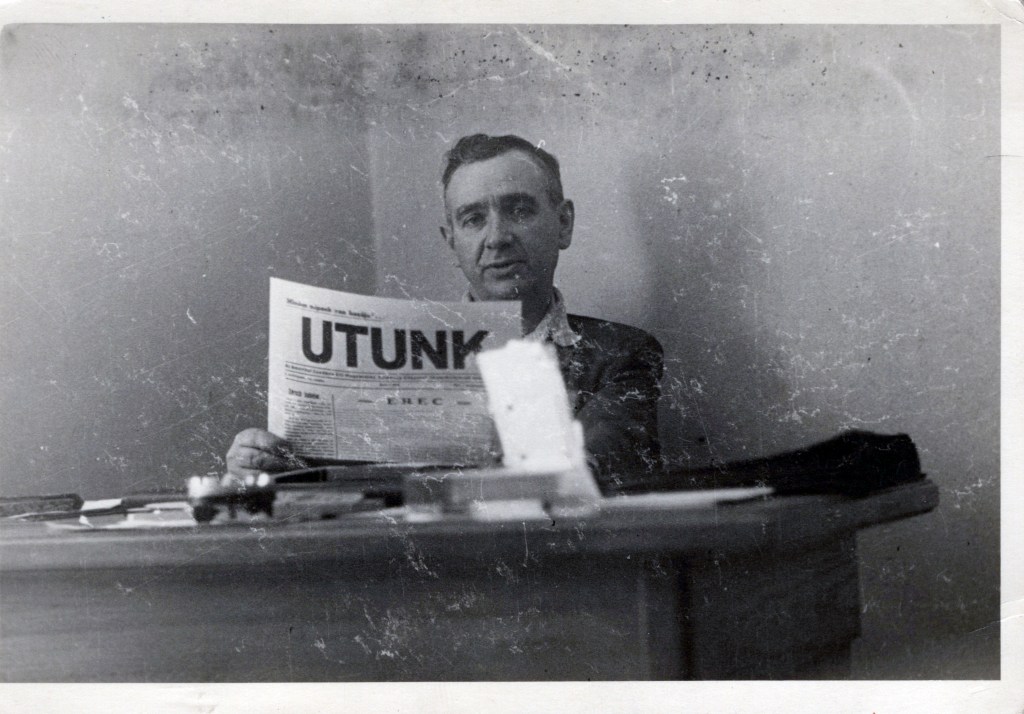
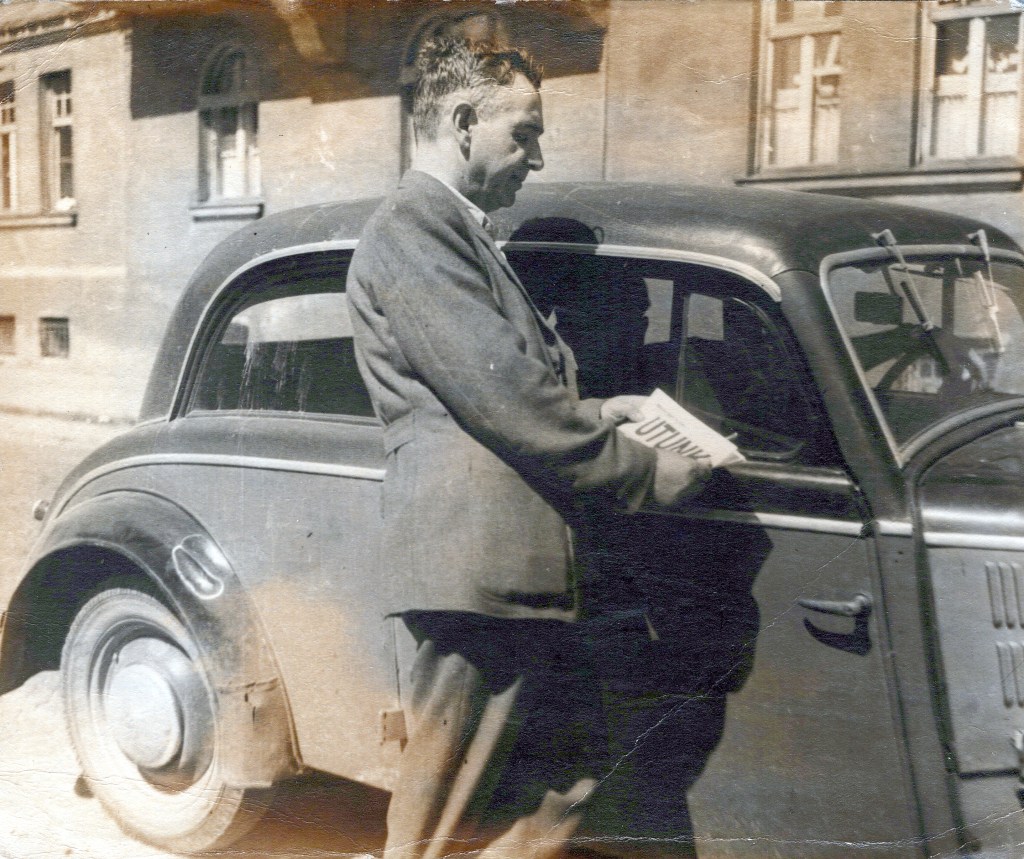
Around 1948, Jeno and Tom moved from Feldafing to Munich. One of the things Jeno did was found a Hungarian language newspaper – Utunk or “Our Way”.


Jeno wanted to return to Mezocsat and rebuild his life there but his son Tom convinced him that they should immigrate to the United States. In order to immigrate to the United States, it was necessary to have a job and a sponsor who would guaranty that the immigrant would not be a financial burden on their adopted country. Distant relatives, the David Schwartz family arranged for Jeno and Tom’s immigration. A congregation on the West side of Cleveland, Ohio was willing to hire Jeno as its Rabbi. The Markstein family (Benjamin and Helen) was also involved in bringing Jeno and Tom over. They hoped that Jeno would marry their daughter Margaret However, Jeno had fallen in love with Gertrude Guttmann, a widow residing in the Weilheim Displaced Persons Camp following the end of the war. but he was already heavily involved with Gertrude Guttman, whom he ultimately married while she was living in Cincinnati. Helen’s father was Herman Zopf and her mother was Riza Schwartz. I suspect that Riza is the connection to the David Schwartz part of the family.

Jeno and Tom arrived in New York on June 17, 1949 on the U.S.S. General Ballau. Alien Registration Number A7214482. Document No. V088ZG02055

After a very brief period in New York when they stayed with the Kertesz family as Jeno hoped to stay in New York and work as a journalist, they took the train to Cleveland where they were met at the station by the Schwartz family. The sponsor was a distant relative. Within a few days, Jeno and Tom had rented room with kitchen privileges and Tom started working as a laborer in a small factory. Jeno and Tom lived extremely frugally until Eugene got a job in the shipping room in a clothing factory as an order filler.
Jeno married Gertrude Guttmann in Cincinnati, Ohio at Adath Israel Temple in 1950. Jeno started working in the office of the clothing factory (Bobby Brooks) and also started selling insurance while Tom started his studies at the Case Institute of Technology (now Case Western Reserve Reserve University). Trudy became a key punch operator (using IBM cards) and Jeno, Tom and Trudy moved into an apartment on Eddy Road, after purchasing the previous renter’s furnishings in order to get the apartment.
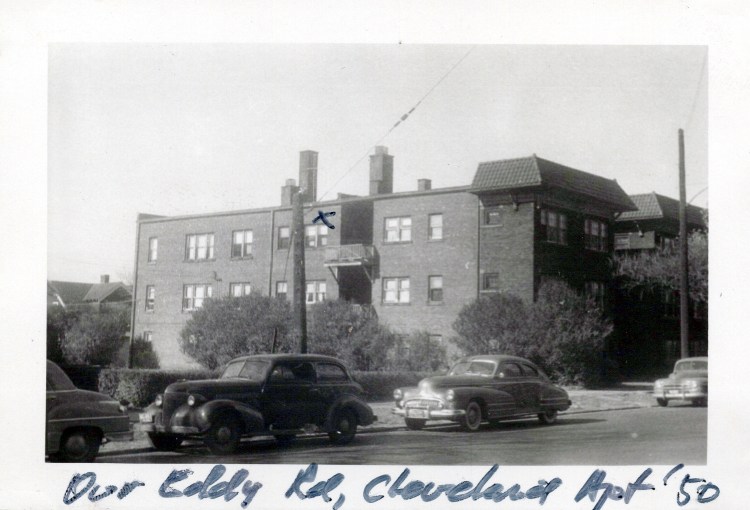
Gertrude had been at Displaced Persons Camp Weilheim from September 31, 1945 until June 27, 1948. Eugene arrived in New York, going through Ellis Island on June 17, 1949, having traveled from Bremenhofen Germany on the U.S.S. General Ballou. He became naturalized US citizen at age 55 on November 11, 1954.
Tom, after failing the draft exemption test by three points and not being in the top 10% of his class, was drafted in February 1953, the first and second semester of his junior year while studying electrical engineering and otherwise doing quite well. After four months of training with the 101st Airborne Division, Tom served in Military Intelligence until his discharge in February of 1955. While Tom was away, Jeno ventured into insurance on a full time basis and stayed in the business well past his 85th birthday. Helping people with “wiederguttmachung” (reparations) was a supplemental activity which he pursued almost the time he entered a nursing home on June 9, 1986. Eventually Trudy and Eugene purchased a home at 4062 Eastway Road, South Euclid (Cleveland) Ohio. They loved their home and spent much time in the yard, enjoying a large apple and a plum tree that not only provided fruit, but also shade under which they spent many happy days. Eugene operated his insurance agent business from his basement office after he closed his office downtown.
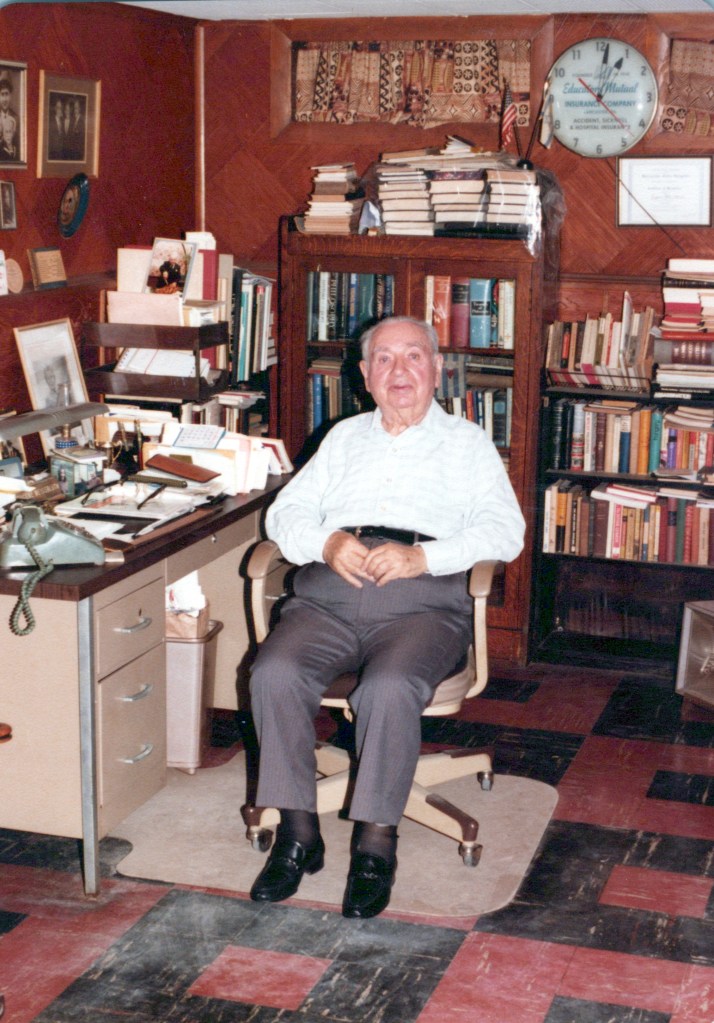
Jeno was active in the Jewish community of Cleveland, serving as President of the Eddy Road Temple, President and Vice President of the Warrensville Road Temple and as an officer in his B’nai Brith lodge. He kept kosher at home (but certainly not when he went out) prayed daily, wearing his tefillin, and was very generous with his charitable contributions. He and Trudy were honored as the Israeli Bonds People of the Year
He and Trudy had many friends in the Cleveland community, which was good because they never learned to drive a car. They walked to Temple and to shopping, used the bus and the train (the “rapid transit”) and received rides from kindly friends. Mr. and Mrs. Lucky were good friends and fellow Hungarian immigrants. Mr. and Mrs. Lucky’s son Paul and his wife live in Cincinnati, Ohio where they practice dermatology. I believe they knew each other going back to the time of the forced labor battalions. In addition, Mr. and Mrs. Leslie Kondorossy were also good friends. Leslie was a composer and often played the piano at their home. He even composed a piece in 1969 in their honor entitled “Ruth and Naomi” for one of their anniversaries.
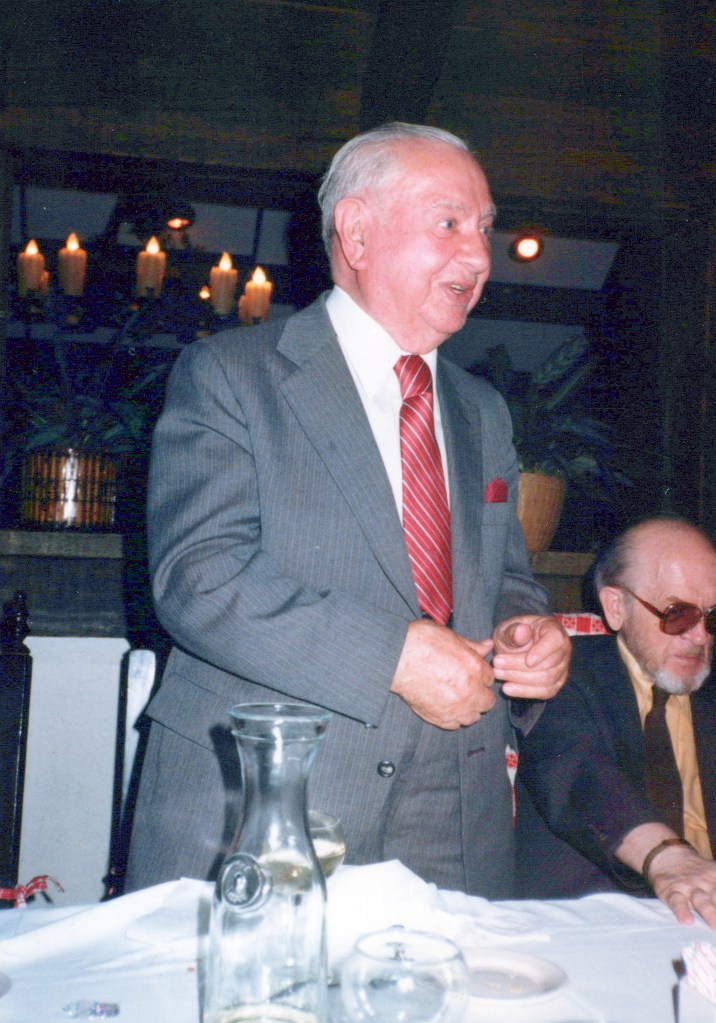
Jeno loved his grandchildren very much-He shared his hobbies of coin and stamp collecting with them from an early age, encouraging them to collect and giving them stamps and coins.
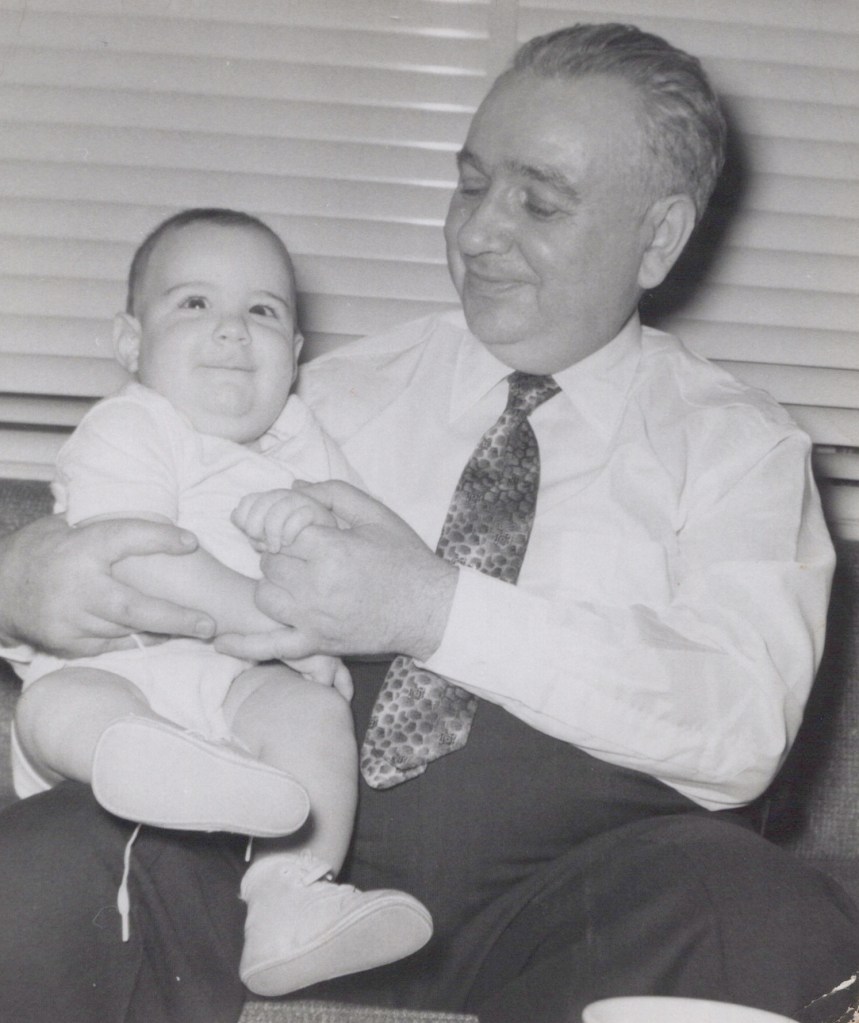
When he would come to visit or his grandchildren would visit him, he would always either take them shopping for a big shopping bag of candy or already have it in place and he always brought my mother a box of Brach’s chocolate covered cherries. He also sent us gold foil covered coins (“Hanukah gelt”), dreidels and other treats for Hanukah, never forgetting our birthdays either. He sacrificed for us, paying each year the premium for a life insurance policy that would mature when we were teenagers, giving us the cash value of the paid up policy. It was a great start to our personal college funds and my sister Judy used part of hers to make a trip to Israel as a young teenager. Jeno and Trudy took my sister Judy and me by bus to the Chautauqua Institute in New York for a week long visit. It was there that my grandfather saw and ate his first hamburger. We were at a place called The Refectory and he saw a sizzling patty of meat on the grill. He pointed at it and asked the counterman “Vat is dat?” The counterman told him and sure enough, Grandpa enjoyed his first hamburger. We saw famous violinist Yehudi Menuhin (who my grandfather said he knew personally) perform in the amphitheater, saw symphonies, took a typing class, hung out on the beach and met a German ambassador who again, was a friend of my grandparents. I have great memories of my time with my grandfather-whether it was trip on the SS Goodtimes on Lake Erie, fishing, climbing the apple tree, a trip to his office or the zoo or just hanging out with him in the basement. I always enjoyed my trips to Cleveland to visit my grandparents when I was in college as well.
Eugene died on February 5, 1989 and is buried in the Zion Memorial Park Cemetery, located at 5461 Northfield Road, Bedford Heights (Cleveland), Ohio in Section Zion Cemet, Block Z1, Lot 1, Grave 77.
The epitaph on his grave is follows: “May his soul be bound up in the bond of eternal life”. I Samuel 25:29.

 Our Family-Our History
You must be logged in to post a comment.